Pages

Friday, July 31, 2015

Endoscope surgery robot uses air power for a steady touch

Japanese researchers have developed an air-powered surgical assist robot that can change a camera view inside a patient’s body with a mere nod by a surgeon.
Emaro is the first pneumatically driven robot in the world that can control an endoscope, a tubelike camera used to see inside the body, to assist surgeons in operations, according to the researchers from Tokyo Institute of Technology and Tokyo Medical and Dental University.
Emaro consists of a compressor, a control panel and a column that supports an arm that works the endoscope. The surgeon can control its movements in hands-free fashion while working forceps manipulators inside the body and viewing the Emaro camera feed on a large monitor.
Because it’s powered by compressed air, the Emaro endoscope can move smoothly and precisely, and the researchers said it can improve the safety of surgery with laparoscopes, a type of endoscope. Laparoscopic surgeries involve the insertion of long fiber-optic tubes through small incisions in the abdomen. Such minimally invasive operations leave smaller scars and can promote better recovery.

Video gaming sparks excitement in China

These are exciting times to be a gamer in China, according to 19-year-old Dai Qi, a soon-to-be college student.
The country has recently lifted its ban on video game consoles, and gamers like Dai are trying to decide between buying an Xbox One or a PlayStation 4.
“Now we don’t have to go outside the country to buy gaming systems,” he said on Thursday.
Dai was among the thousands of visitors who came to ChinaJoy, an annual gaming convention in Shanghai. And if the crowds were any indication, China’s interest in video game consoles is high.
At the show, Microsoft and Sony attracted throngs of gamers, including high school and college students. Long lines formed around the two exhibition booths as visitors played games such as Halo: The Master Chief Collection and Street Fighter V while dance music boomed in the background.
It’s the first edition of the ChinaJoy show at which foreign video game consoles have been legally available. Although China effectively ended its ban on gaming systems in September 2013, it was a year before Microsoft began selling its Xbox One there, and Sony’s PlayStation 4 only entered the Chinese market in March.
With the lifting of the ban, Microsoft and Sony have a huge opportunity to tap one of the world’s largest markets—but analysts have been questioning whether Chinese consumers will buy the consoles.

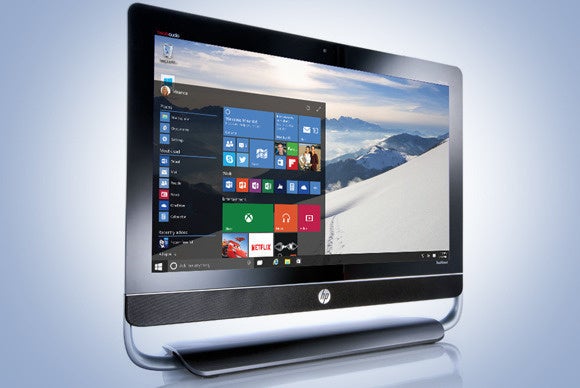
Windows 10 is already installed on 14 million devices


Windows 10 had been installed on more than 14 million devices by Thursday evening, a small step toward the company’s goal of an installed base of 1 billion.
“While we now have more than 14 million devices running Windows 10, we still have many more upgrades to go before we catch up to each of you that reserved your upgrade,” the company said in a blog post at 6.28 p.m. Thursday.
The latest version of Windows saw a somewhat bumpy rollout on Wednesday, with problems including a "Something happened" error screen seen during the installation process. Other issues involved downloading apps from the Windows store or copying text in the operating system.

Wednesday, July 29, 2015

Windows 10 review: It's familiar, it's powerful, but the Edge browser falls short


We may as well refer to Windows 10 as a date, or an hour, as much as an operating system. It’s a moment in time. A month from now, it will have changed, evolved, improved. But right now? Microsoft has shipped an operating system that was meticulously planned and executed with panache, but whose coat of fresh paint hides some sticks and baling wire.


Windows 10 will keep evolving


Note that this review is not, and will never be, the review of the final version of Windows 10. Microsoft may have frozen its core operating system in advance of the July 29 launch, but the OS and its apps will be updated continually over their lifespan—which, in the case of Windows 10 itself, will be 10 years. We’ve received multiple assurances, however, that what we’re reviewing will be what existing Windows users will begin to receive starting July 29 (remember, the rollout will be in phases), and what will be installed on new PCs from a vendor like Lenovo or Dell. We’ll revisit this review on launch day, just to be sure.
Let’s emphasize this—there is an incredible amount of activity going on right now. Microsoft is busy fixing bugs, hour by hour. Several issues which we noticed in a draft of this review were resolved by the time the final draft was edited. We expect this will continue.
Windows 10 is designed to welcome most Windows users. It will be a free upgrade for users of both Windows 7 and Windows 8/8.1, assuming they switch within a year’s time. Don’t dilly-dally; it’s worth it. 

Monday, July 27, 2015

Should You Use Standby or Hibernate?

 It's an age-old question: When you're done using your laptop, or just taking a break from work, should you put it to sleep, let it hibernate, or turn it all the way off?
Allow me to answer by way of a mnemonic: hibernate is great. You see, sleep mode (a.k.a. standby) puts your system into an off-like state, allowing you to pick up where you left off after just a few seconds (unlike rebooting, which can take minutes). But a PC in standby mode continues to consume battery power, so it's not uncommon to return to a "sleeping" PC to find that it's just plain dead.